
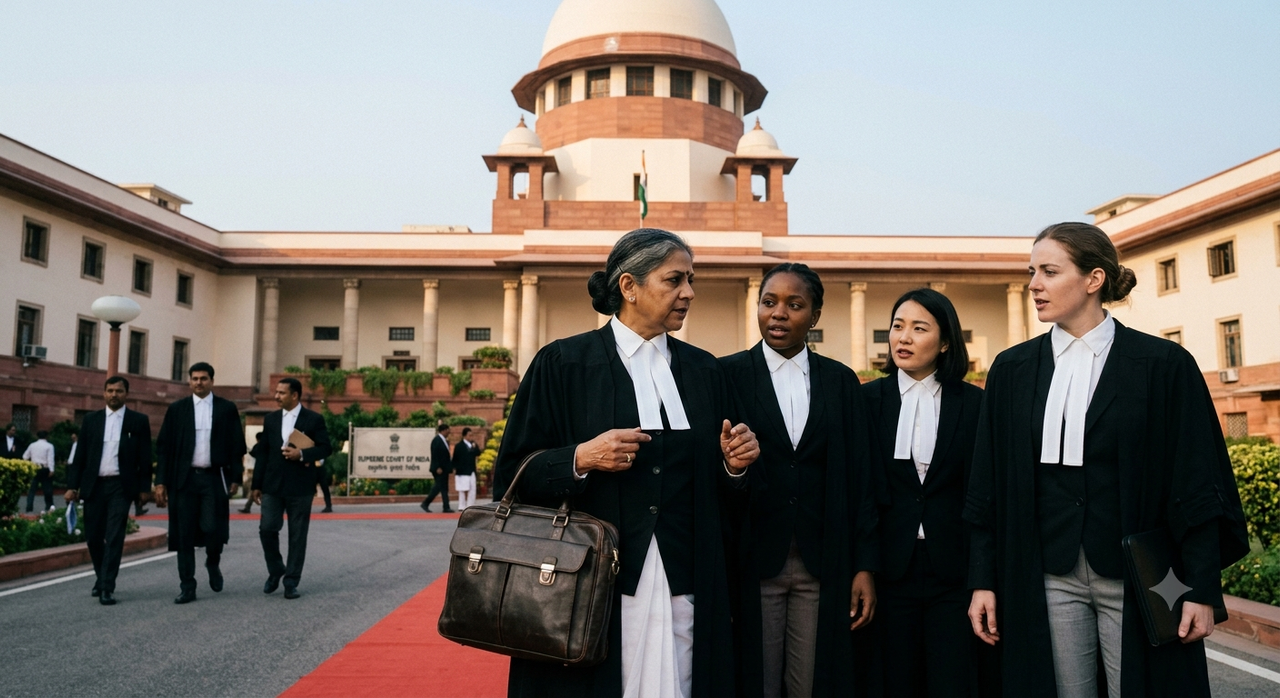
Criminal Legal Help Before the Supreme Court
Dealing with criminal cases in the Supreme Court can include serious charges, appeals, bail decisions, sentence issues, requests to stop a case, and other key legal options.
A skilled criminal lawyer who handles Supreme Court matters can help a person understand the legal steps involved and decide on the best course of action based on the facts and documents.
The Supreme Court has official groups of cases that include criminal appeals, bail and anticipatory bail cases, requests to stop a case, suspending a sentence, removing bail, matters related to the Narcotics Drug and Psychotropic Substances Act (NDPS), cases against women and children, corruption cases, and other criminal types.
Criminal Appeals in the Supreme Court
The Supreme Court can review criminal cases according to the Constitution and laws.
It has rules explaining how certain criminal appeals can reach the Court.
A criminal lawyer can look at the judgment or order being challenged, previous court proceedings, evidence, and the legal reasons for the appeal before suggesting if another legal step is needed.
Bail and Anticipatory Bail Cases
Bail is a key element in criminal cases.
The Supreme Court has specific categories for regular bail, anticipatory bail, bail during an appeal, suspending a sentence, removing bail, and challenging bail orders.
Depending on where the case is in the process, legal help can include:
Regular bail
Anticipatory bail
Bail during appeal
Suspension of sentence
Cancellation of bail
Challenges to bail orders
Interim applications
The result of a bail request depends on the facts, the law, and the judge's decision.
Special Leave Petitions in Criminal Cases
A Special Leave Petition (Criminal) can be filed if the legal conditions are met.
Preparing such a petition often requires checking the High Court judgment, lower court records, the basis for the challenge, and supporting documents.
The Supreme Court Legal Services Committee has a checklist for a criminal SLP that includes documents like the certified High Court judgment, the High Court file, FIR, evidence, trial court judgment, and supporting affidavits.
Quashing Criminal Proceedings
Sometimes, criminal cases can be stopped through a legal option if the facts and law support it.
The Supreme Court has specific categories for cases where criminal proceedings, charge orders, summoning orders, and some temporary orders are challenged.
A criminal lawyer can look at the FIR, complaint, investigation materials, and lower court orders before advising on the possible remedy.
Serious Criminal Offenses
Supreme Court criminal cases can involve various serious charges like:
Murder and other serious crimes
Cheating and forgery
Crimes against women
POCSO (Protection of Children from Sexual Offences) cases
NDPS (Narcotics Drug and Psychotropic Substances Act) cases
Corruption cases
Economic offenses
Bail matters
Criminal appeals
Sentence-related cases
Criminal writ petitions
The Supreme Court separately groups many of these criminal cases for better case management.
Organizing Criminal Case Records
Before talking to a Supreme Court criminal lawyer, it's helpful to gather all the available documents, like:
FIR or complaint
Arrest and remand papers
Charge sheet
Trial court judgment
High Court judgment or order
Bail orders
Evidence and related documents
Past petitions
Notices
Medical or forensic documents, if relevant
Having all the documents helps the lawyer understand the legal history better.
Choosing the Right Criminal Lawyer for Supreme Court Cases
When picking a Supreme Court criminal lawyer, consider the type of case, the lawyer’s experience, knowledge of criminal procedures, ability to analyze complex legal records, good writing skills, and familiarity with Supreme Court procedures.
It’s important to avoid relying only on terms like “best” or “top.” The lawyer's suitability should be based on the specific legal issue and needs of the case.
Legal Help for Criminal Matters
People who qualify may also get legal aid.
The Supreme Court Legal Services Committee offers free legal services to eligible individuals in cases under the Supreme Court’s jurisdiction, such as legal help and case preparation.
The availability of legal aid depends on the qualifying conditions.
Criminal Representation in the Supreme Court
A top criminal lawyer for Supreme Court cases can help with case review, legal research, writing documents, preparing petitions and appeals, checking lower court records, and preparing for court.
Since criminal cases can have major personal and legal effects, legal advice should be based on the actual case records, not just online information.
Disclaimer: This page is for general information only and does not provide legal advice.
No specific outcome can be promised.
The right solution will depend on the actual situation, the evidence provided, the steps that have already been taken, and the relevant laws that apply.