
Introduction
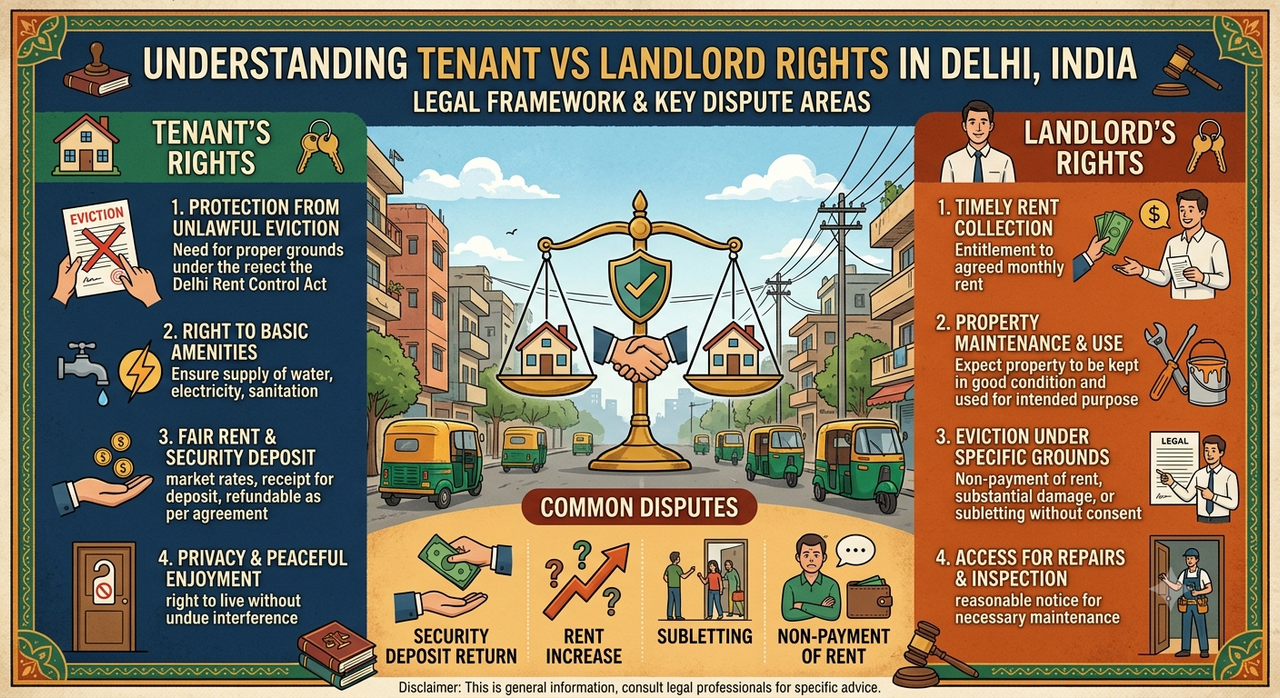
It's important to understand the rights of both tenants and landlords in Delhi, as conflicts can happen over things like rent, security deposits, repairs, maintenance, who lives in the property, removing someone from the property, subletting, raising the rent, or if someone breaks the rental agreement.
The situation can vary based on the rental agreement, the type of property, the laws that apply, and the facts of the case.
Delhi has its own rules about rent control, and the Delhi High Court often deals with changes to rent and related matters.
Tenant Rights in Delhi
A tenant in Delhi usually has rights based on the rental agreement and the law.
These may include:
- The right to live in the property as agreed
- The right to get proper notice if required
- The right to take action against someone who interferes without permission
- The right to get a refund or proper return of the security deposit, after any legal deductions
- The right to use the property for the agreed purpose
- The right to fight an eviction in court
The type of protection a tenant gets depends on the kind of rental and the legal setup in place.
Landlord Rights in Delhi
A landlord in Delhi also has several legal rights, such as:
- The right to get rent as agreed
- The right to make sure the tenant follows the rules of the rental
- The right to take back the property if allowed by law
- The right to take action if rent is not paid
- The right to take legal steps if someone rents the property without permission or uses it wrongly
- The right to take back the property for legal reasons
The Delhi High Court often looks at eviction claims under the Delhi Rent Control Act, 1958, including cases involving unpaid rent and a genuine need for the property.
Rent Payment and Rent Disputes
Rent should be paid according to the rental agreement or the law.
Tenants should keep proof of payment, like receipts, bank statements, UPI records, or other documents.
If a landlord says rent hasn't been paid, the tenant should show proof.
Landlords should also keep records of rent received and any unpaid amounts.
A rent dispute lawyer in Delhi can look at the agreement, payment history, and notices before advising on the best solution.
Security Deposit
Security deposits often cause problems for tenants and landlords in Delhi.
The rental agreement should clearly say:
- How much the deposit is
- What the deposit is for
- When and under what conditions the deposit can be used
- When the deposit will be returned
- Who is responsible for damage or needed repairs
Tenants should get a written confirmation of the deposit and keep proof of payment.
Repairs and Maintenance
Who is responsible for repairs can depend on the rental agreement, the type of repair, and the law.
Routine maintenance may be handled differently from major structural repairs.
Tenants should inform the landlord about serious issues before making their own repairs.
The Transfer of Property Act gives legal rights and responsibilities to both landlords and tenants, but these can be changed by the rental agreement and local laws.
Can a Landlord Evict a Tenant Without Following the Legal Procedure?
No, a landlord can’t assume that asking a tenant to leave means they can kick them out without following the proper legal steps.
If rent control rules apply, eviction must follow specific reasons and procedures.
The Delhi High Court has its own rules for handling rent control cases.
The right process can depend on the rental arrangement and the law involved.
Can a Tenant Stop Paying Rent if the Landlord Has Not Made Repairs?
Not automatically.
A tenant should not stop paying rent on their own without getting legal advice.
Whether a tenant can ask for repair, compensation, or other help depends on the agreement, the situation, and the law.
Can a Landlord Increase Rent?
It depends on the rental agreement and the law for that property.
A rent increase should be checked against the terms in the agreement and any laws limiting how much rent can go up.
A tenant facing a rent increase should get legal advice before agreeing or disagreeing.
What Happens When a Tenant Does Not Pay Rent?
Not paying rent can lead to legal problems.
In certain situations, a landlord can seek to recover unpaid rent and/or regain control of the property through proper legal steps.
Records from the Delhi High Court show cases where landlords have filed eviction actions under the Delhi Rent Control Act, often citing non-payment of rent as outlined in Section 14(1)(a).
How a tenant responds might depend on their payment history, the notices they've received, any previous legal actions, and the relevant laws that apply.
Legal Options for Tenants Facing Unlawful Disturbance
If a tenant is disturbed in their peaceful use of the property or someone tries to take control without following the correct legal process, they may have legal options.
The exact legal remedy will depend on the specific situation, the terms of the rental agreement, and the legal position of the person living in the property.
Legal Actions a Landlord Can Take Against Unauthorized Use or Subletting
A landlord may take legal steps when a tenant uses the property in a way that breaks the rental agreement or the law.
Examples of such violations could include using the property for business purposes without permission, making major changes without approval, or renting it out to someone else without consent.
Whether an activity is considered a violation will depend on the available evidence and the terms of the lease.
The Role of a Clear Rent Agreement
A well-written rent agreement can help prevent conflicts by clearly stating:
- The amount of rent due each month
- How much the security deposit is
- The length of the rental period
- How much notice is needed to end the tenancy
- Who is responsible for maintenance
- What kind of use is allowed
- Conditions for renewal of the lease
- Rules about subletting
- How the tenancy can be ended
Both the landlord and the tenant should keep a signed copy of the agreement and any documents related to payments.
Important Documents for Resolving a Dispute Between a Tenant and a Landlord in Delhi
Depending on the nature of the disagreement, these documents can be useful:
- The rent agreement or lease document
- Proof of rent payments
- Bank or payment records
- Receipt for the security deposit
- Property-related documents
- Identification documents
- Electricity and water bills
- Communications about repairs
- Legal notices and responses
- Photographs
- Any previous court orders
- Messages or emails between the tenant and landlord
Keeping these documents in order, arranged by date, can help a lawyer better understand the situation.
When to Seek Legal Help
A lawyer specializing in tenant and landlord issues in Delhi may be needed in cases involving:
- Eviction actions
- Unpaid rent
- Security deposit disputes
- Unauthorized possession
- Subletting
- Rent increases
- Ending the lease
- Damage to the property
- Disputes between commercial tenants
- Possession-related court cases
- Rent control legal issues
Getting legal advice early can help identify the right court and avoid making mistakes during the process.
Differences Between Tenant and Landlord Rights in Delhi
The main difference is that tenants usually have rights related to their lawful use of the property and the terms of their lease, while landlords typically have rights related to ownership and can take legal steps regarding rent, possession, and the terms of the lease.
Neither the landlord nor the tenant can assume that ownership automatically allows the landlord to kick the tenant out right away, nor can a tenant expect that being a tenant gives them permanent rights.
The specific terms of the agreement and the law must be examined.
Summary
Understanding the rights of tenants and landlords in Delhi can help both parties manage rental disagreements more effectively.
Issues like payments, security deposits, repairs, possession, eviction, subletting, and ending the lease can all lead to legal problems.
Since Delhi rent disputes can be handled under different legal rules depending on the property and the type of tenancy, it’s important to look at the specific facts before taking legal action.
The Delhi High Court has specific rules and procedures for rent control cases, while other laws also determine the rights and responsibilities of landlords and tenants.