
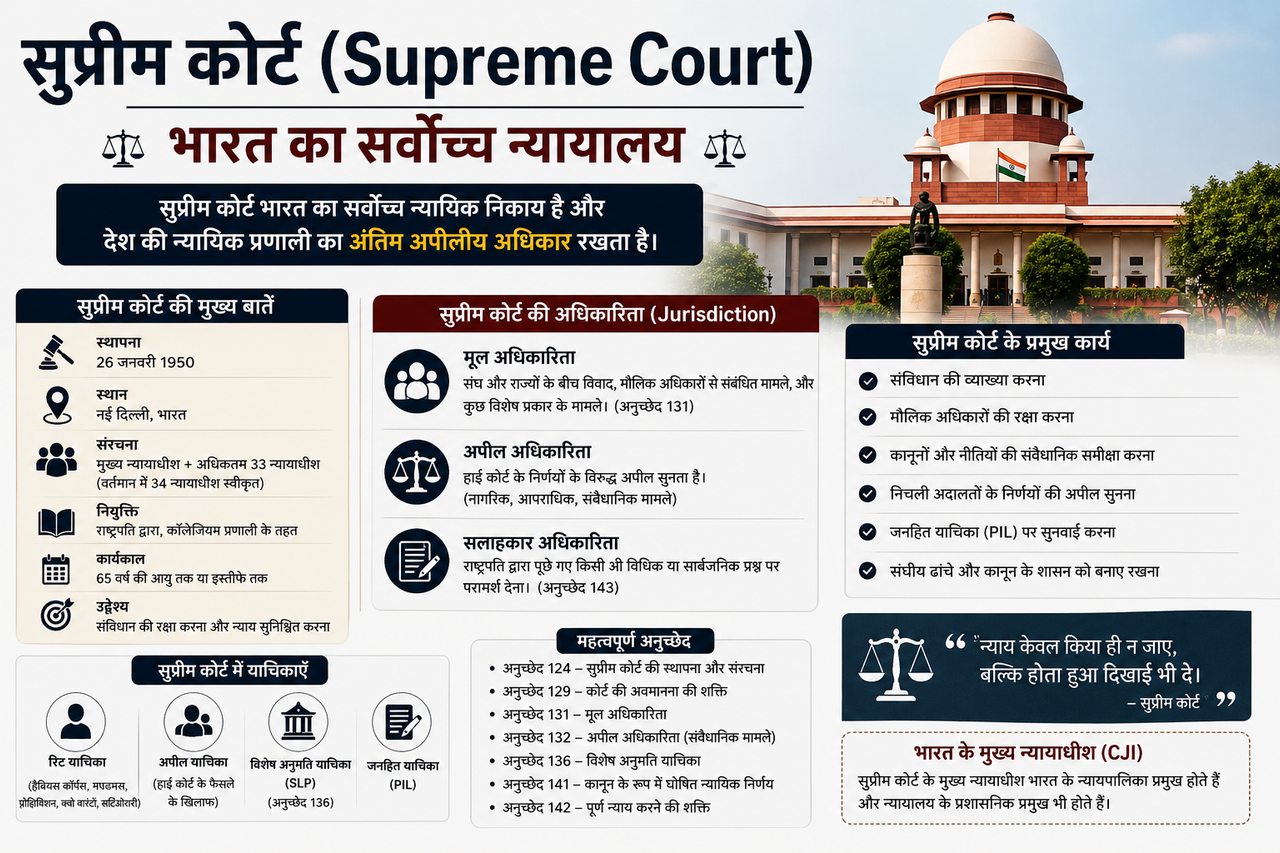
AOR Supreme Court: Meaning, Eligibility, Role and Complete Process
If you are looking for AOR Supreme Court, you may be wondering what an Advocate-on-Record is, who can become one, and why they are important in Supreme Court cases.
An Advocate-on-Record (AOR) is a lawyer who has the right, as per the rules of the Supreme Court of India, to act, file documents, and represent parties in court.
The AOR system plays a key role in how cases are handled in the Supreme Court.
What Is an AOR in the Supreme Court?
AOR stands for Advocate-on-Record.
The Supreme Court Rules create a special group of lawyers known as Advocates-on-Record.
An AOR has the authority to act on behalf of a party in the Supreme Court and is responsible for the procedural tasks in the case.
A person going to the Supreme Court may have a senior lawyer or another lawyer presenting arguments, but the actual filing and management of the case often fall on the Advocate-on-Record.
This means the role of an AOR is more than just being a lawyer who appears in court.
Who Can Become an Advocate-on-Record?
An advocate cannot automatically become an AOR right after joining a State Bar Council.
The Supreme Court has set specific criteria for advocates wishing to be recognized as Advocates-on-Record.
These include a certain amount of legal experience, training under an already qualified AOR, and passing an exam for that purpose.
The advocate also needs to meet the requirements under the Supreme Court Rules.
Since the Supreme Court regularly updates its rules and procedures, anyone wanting to become an AOR should check the most recent guidelines before applying.
What Does an AOR Do in the Supreme Court?
An Advocate-on-Record has several important roles in handling cases.
The AOR may be responsible for:
* Filing cases in the Supreme Court
* Signing and submitting legal documents
* Filing appeals and petitions
* Submitting applications
* Receiving official communications
* Managing compliance with court procedures
* Representing the party during court proceedings
* Organizing documents and case files
* Helping the court with its procedural needs
The AOR ensures that the case follows all the required legal procedures of the Supreme Court.
Can Any Advocate File a Case in the Supreme Court?
Not every lawyer has the same rights to file cases before the Supreme Court.
The AOR system gives specific responsibilities for filing and conducting cases to Advocates-on-Record, as laid out in the Supreme Court Rules and exceptions.
While an arguing lawyer may present the case to the court, the AOR plays a crucial role in the formal aspects of the case for the party involved.
This is why people often need to work with an AOR Supreme Court lawyer when starting legal proceedings.
What Is the Difference Between an AOR and a Senior Advocate?
An AOR and a Senior Advocate are two different roles.
An Advocate-on-Record is mainly involved in the formal filing and managing of legal cases before the Supreme Court under its rules.
A Senior Advocate is appointed by the Supreme Court or a High Court based on their professional standing and experience.
A Senior Advocate may handle complex matters, while an AOR focuses on the formal procedures and filings.
In many important Supreme Court cases, an AOR and an arguing lawyer may work together.
How to Find an AOR for a Supreme Court Case?
If you plan to go to the Supreme Court, you should first understand the nature of your case and the best legal remedy.
Depending on the case, the legal team may include:
* Advocate-on-Record
* Arguing counsel
* Senior Advocate
* Junior advocates
* Legal researchers
The AOR manages the filing and procedural sides of the case, while the arguing counsel handles the actual legal arguments and submissions.
When choosing an Advocate-on-Record in the Supreme Court, consider their experience, areas of practice, the needs of the case, and the procedural requirements.
Why Is an AOR Important in Supreme Court Cases?
Supreme Court cases involve strict procedural rules.
If there are errors in formatting, missing documents, timing issues, or failures to follow the required procedures, it can create unnecessary complications.
An experienced Advocate-on-Record (AOR) can help ensure that a case is properly prepared and filed according to the rules of the Supreme Court.
This is especially important in cases that involve:
* Criminal appeals
* Civil appeals
* Special Leave Petitions
* Constitutional matters
* Writ petitions
* Review petitions
* Transfer petitions
* Matrimonial appeals
* Bail-related matters
AOR and Special Leave Petition (SLP)
Many cases reach the Supreme Court through a Special Leave Petition under Article 136 of the Constitution of India.
An AOR can be involved in preparing and filing the SLP, and making sure everything follows the correct procedures set by the Supreme Court.
However, just because a Special Leave Petition is filed doesn’t mean the Supreme Court will automatically take up the case.
The Court first decides whether to grant special leave to hear the matter.
Can a Senior Advocate File a Case Directly?
The roles of a Senior Advocate and an AOR are different in the Supreme Court.
When the rules say an AOR is required, the case must usually be filed through an Advocate-on-Record.
A Senior Advocate can appear and argue the case, but that depends on the rules.
So, a person involved in a case might have both an AOR and a separate advocate who argues the case.
Frequently Asked Questions
What does AOR stand for in the Supreme Court?
AOR stands for Advocate-on-Record.
What is the role of an AOR?
An AOR is responsible for handling important procedures and filings for a party before the Supreme Court as per the rules.
Can any advocate become an AOR?
No.
An advocate has to meet certain eligibility, training, and examination standards as set by the Supreme Court Rules.
Is an AOR necessary for filing a case in the Supreme Court?
If the Supreme Court Rules require an Advocate-on-Record for a case, it must be filed and handled through an eligible AOR, unless there are specific exceptions.
Can an AOR argue a case in the Supreme Court?
An AOR can appear and argue, but only if it follows the Supreme Court rules.
The party can also hire another advocate or Senior Advocate to argue the case if needed.
Conclusion
An Advocate-on-Record plays an important role in Supreme Court practice.
The AOR is responsible for filing and following the correct procedures in the Supreme Court, and helps make sure everything is done properly.
If you are planning to file a criminal appeal, civil appeal, SLP, writ petition, review petition, transfer petition, or another case before the Supreme Court, knowing the role of an AOR can help you choose the right legal team.
The right legal team for a Supreme Court case depends on the nature and complexity of the matter.
A qualified Supreme Court AOR can help with filing, following court rules, and managing the case properly.
Legal Disclaimer: This article is meant for general information only and does not provide legal advice.
Supreme Court procedures and eligibility requirements may change, so always check the latest rules before taking legal action.